

ReGen Water
Water that brings
the land back.
Most water scarcity coverage is about drinking water. The bigger loss is the land that stays dead because there's no irrigation. We made water that fixes both.
01 — How it works
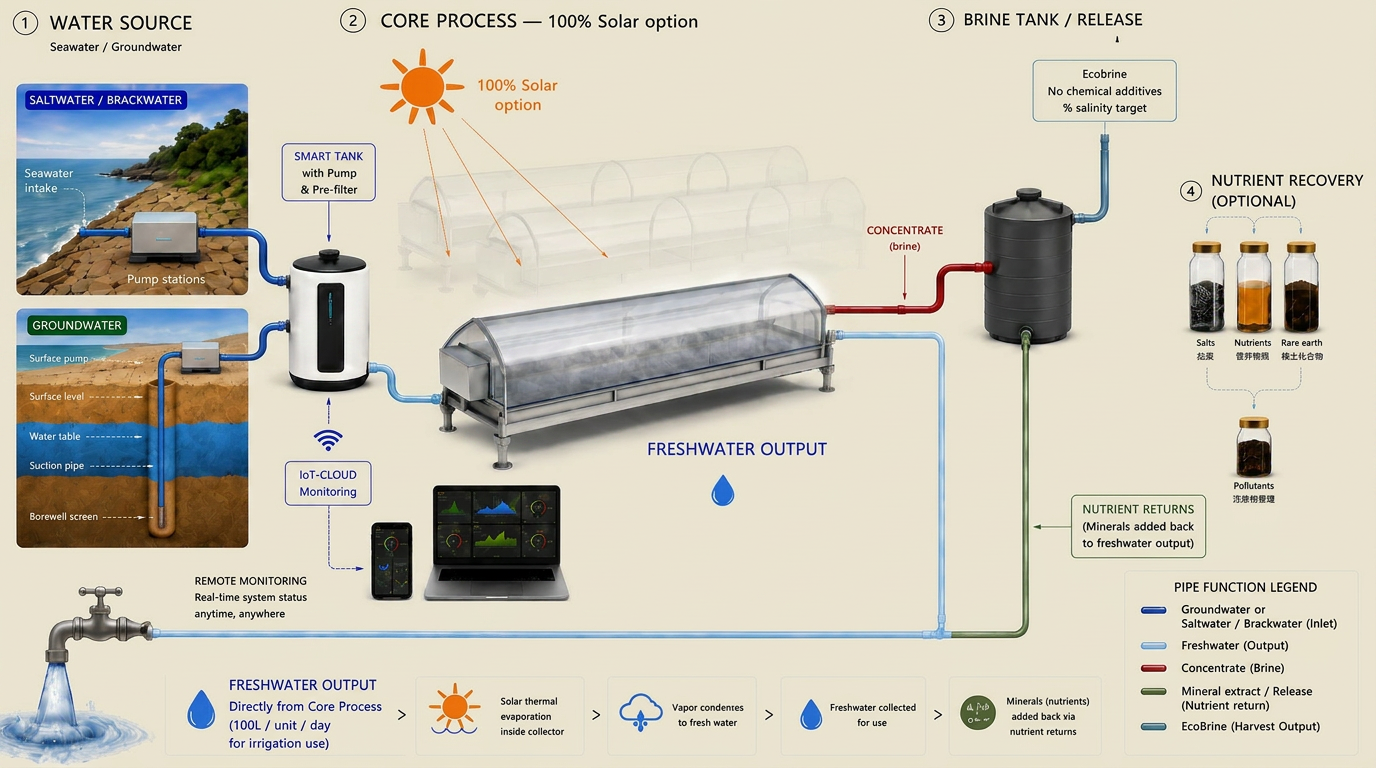
Four steps. Sunlight does the work.
A natural thermal process — not reverse osmosis. No membranes to foul, no chemicals to dose, no high-pressure pumps. Real-time IoT monitoring runs over the cloud from anywhere.
- 01Water source
Seawater intake or groundwater borewell feeds the system through a pre-filter and pump station.
- 02Core process
Solar thermal evaporation inside the collector. 100% solar option — vapour condenses to freshwater on the cool inner wall.
- 03Freshwater tank
Condensed freshwater is collected and routed to irrigation, livestock, or community supply.
- 04EcoBrine harvest
Concentrate is captured in EcoBrine jars at a 7% salinity target — salts, nutrients and rare earths recovered, not dumped.
Solar thermal energy eliminates grid dependence and long-term operating cost.
Natural thermal process — no dosing, no membrane cleaners, no environmental load.
Cloud-based monitoring for real-time performance, predictive maintenance and remote control.
Salts, nutrients and rare-earth by-products captured instead of discharged as waste.
02 — Nutritionally tuned
Not just desalinated. Composed.
Seawater is hostile to soil. At 19,300 ppm chlorine and 10,500 ppm sodium it's actively toxic — most desalination plants strip everything and produce flat, biologically empty water. ReGen does something different.
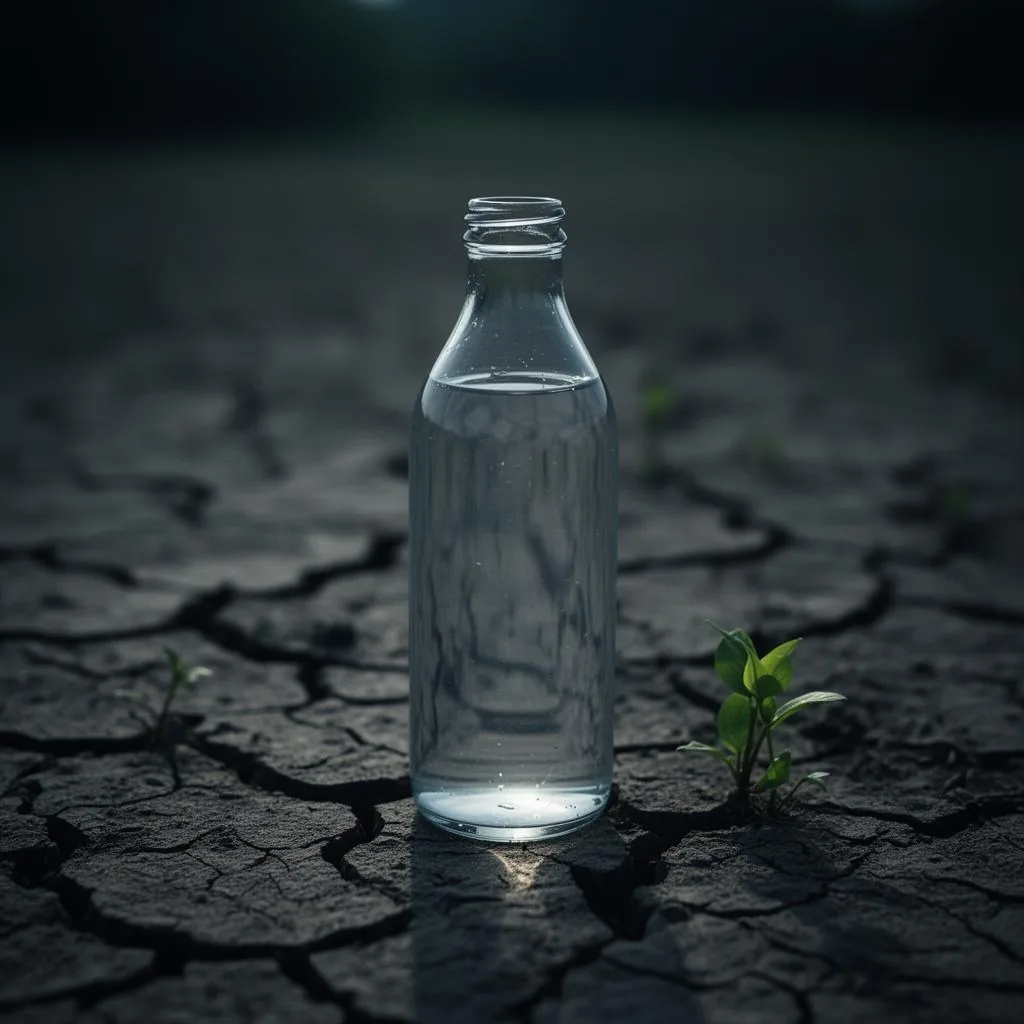
A bottle of ReGen water looks like any other. The difference is what's dissolved in it — and what isn't.
Stripped of the salt that kills soil. Kept rich in the minerals that feed it. The same water is drinkable for a village, safe for livestock, and the right chemistry to bring a dead hectare back.
Natrium and chlorine stripped to non-toxic levels. Calcium, potassium, magnesium and sulfur kept at ratios that actively support root development and the microbial life soil needs to come back.
That's the difference. Conventional desalinated water keeps the land alive. ReGen water gives it something to grow into.

03 — What the water does
From a single irrigation line to a microclimate.
Tuned water on the right land doesn't just grow crops — it kicks off a chain reaction. Soil structure improves, vegetation establishes, local humidity rises, and the site starts sequestering carbon.
Crop diversification
Tuned salinity and mineral profile widen what the land can grow — beyond the salt-tolerant edge cases.
Soil health
Controlled salinity restores structure; retained calcium and magnesium feed soil microbial life.
Microclimate shift
As vegetation establishes, evapotranspiration rises and local temperatures fall — the site starts cooling itself.
Carbon sequestration
Regenerated dryland sequesters an estimated 20–35 tonnes of CO₂ per hectare per year.
Direct feed to crops, orchards, and afforestation plots.
Clean stock water in regions with no freshwater alternative.
Drinking-grade supply for nearby communities and field teams.
Re-watering native vegetation and degraded land at scale.
The financial upside
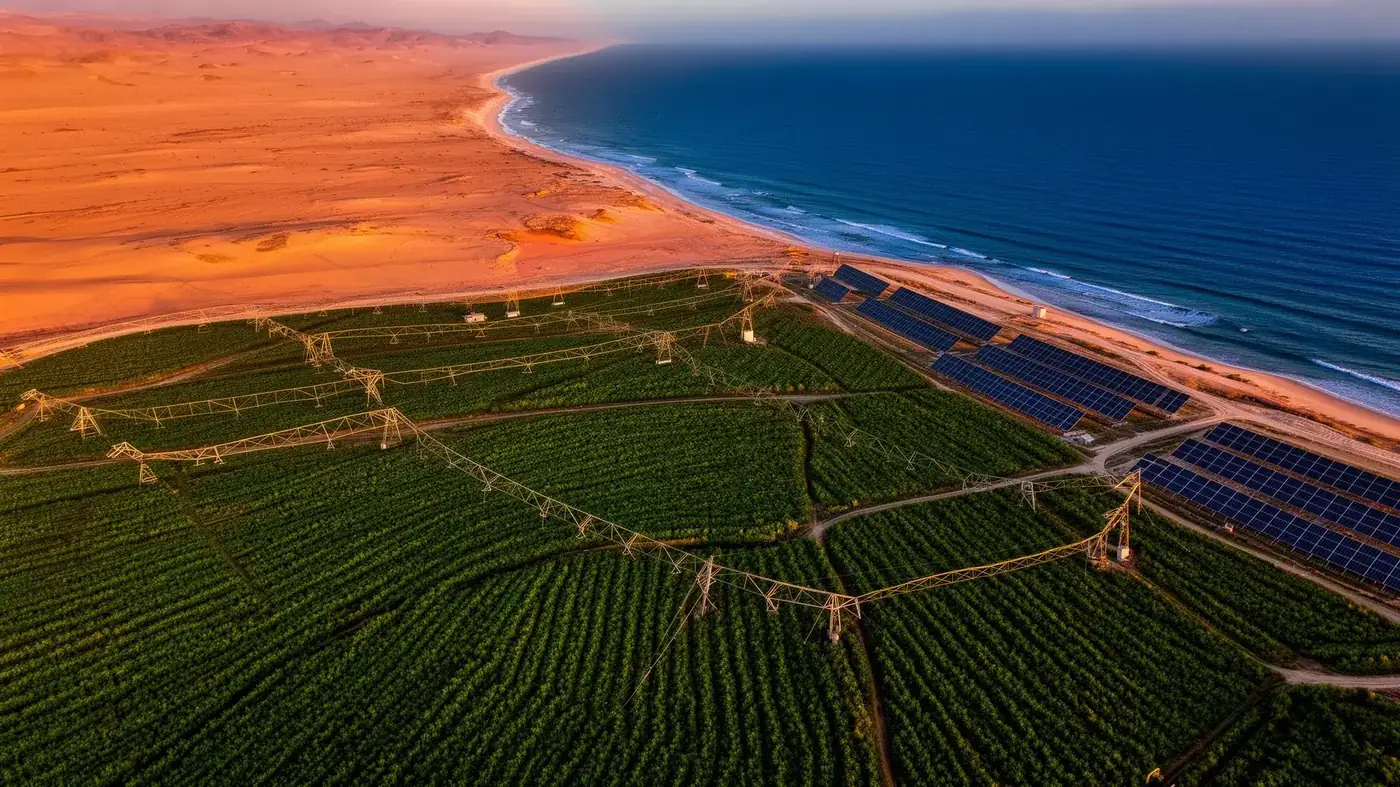
Water economics and a carbon credit on the same hectare.
Restored land earns twice: once on what it grows, again on what it captures. At 20–35 tCO₂e per hectare per year, ReGen sites compound climate-market value year on year as vegetation establishes.
Bring ReGen water to your land.
Tell us about your site. We'll run a feasibility study and design a system.